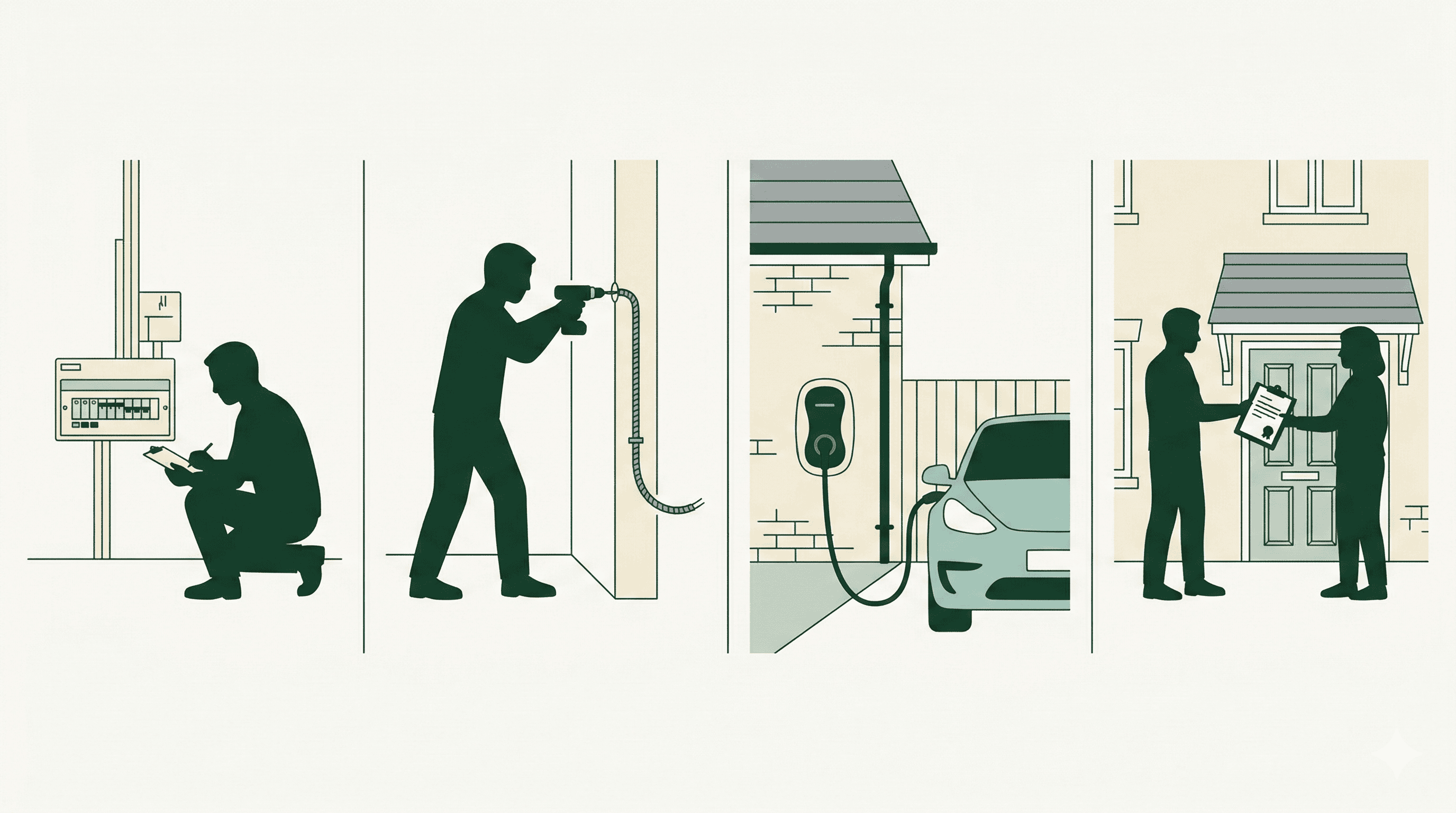
While national firms offer broad coverage, there is a distinct advantage to choosing an installer who knows Sheffield's quirks. A local engineer understands that a house in Nether Edge might have complex old stone walls that require specialist masonry bits, or that a property in Woodseats might have specific drainage patterns that affect where a cable can be buried. Experienced local installers anticipate the requirements of Northern Powergrid and understand the local planning nuances of Sheffield's various Conservation Areas — ensuring that the person surveying your home isn't surprised by a 1-in-10 gradient driveway or a Victorian cellar.
▸Crookes, Walkley, Hillsborough — Victorian and Edwardian terraces on steep climbs where on-street parking is the norm. Installation is only viable with a 'cut-through' to a rear yard or a converted front garden; installers often favour slimline units like the Easee to maintain access in tight spaces.
▸Ecclesall, Fulwood, Dore — Larger semi-detached and detached homes with generous private driveways — far more straightforward installations, though the sheer size of some plots can lead to longer cable runs from the consumer unit to the charging point. Homeowners here often opt for aesthetically discreet units like the Hypervolt to complement the traditional architecture.
▸Waverley, Oughtibridge and newer estates — Modern building standards often mean the electrical infrastructure is EV-ready, making physical installation simpler. However, many of these homes sit within managed estates where the management company may need to approve any drilling into external walls — even for owner-occupiers.
▸Kelham Island, Neepsend and city-fringe apartments — The rise of 'right to charge' means many residents are now working with factors to install shared infrastructure in communal parking blocks — a process that requires a more specialist, commercial-grade approach than a standard domestic installation.